Image rights: what the law says about wedding photos
Private circle, social media, children, the photographer’s contract: simple rules so you don’t get it wrong.
People rarely think about it when planning a wedding, and yet: as soon as there are photos of dozens of people, there are rules. They are simple, and following them avoids the only truly unpleasant situation: a guest who finds their photo somewhere and takes it badly.
This article is a general explanation based on French law, not legal advice. For a specific case, ask a professional. Rules may differ in your country.
The basic principle
In France, everyone has a right over their own image: you can’t publish a photo of a recognisable person without their consent. This principle comes from the right to respect for private life (article 9 of the French Civil Code). The key word is publish: taking a photo and sharing it publicly are two different things.
A wedding is a private circle
A wedding is a private event, between guests who know each other. Sharing the photos among the people who were there, in a closed album, falls within the family and private sphere: it is what every family album has always done. You don’t need to get your 80 guests to sign anything to send them the photos of the evening.
This changes as soon as you step outside that circle: posting on a public account, on a supplier’s website, in an advert.
Social media is another matter
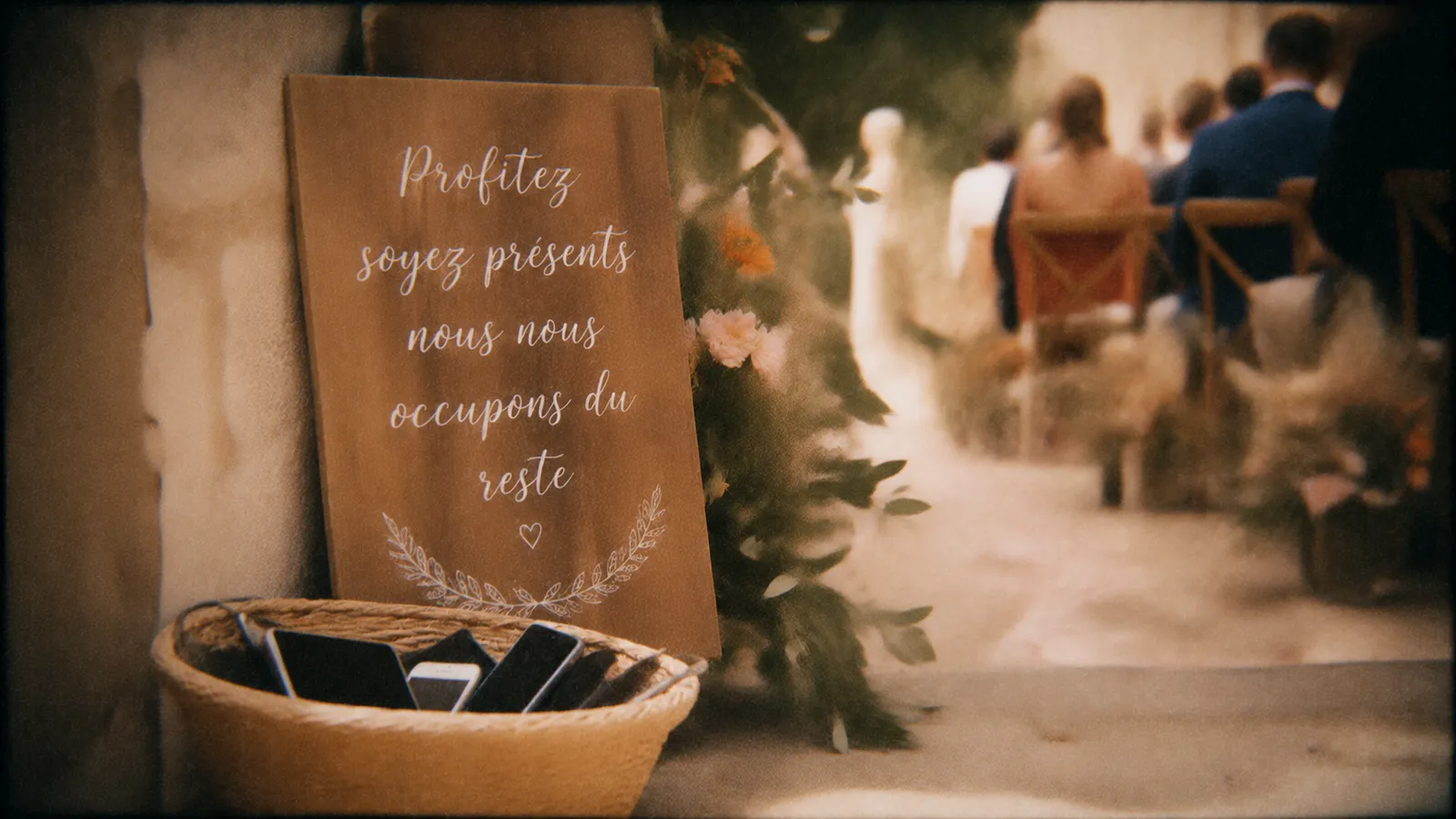
Posting a wedding photo on a public Instagram or Facebook account is public sharing. In practice, the common-sense rule: ask before posting a photo where someone is recognisable and in the foreground. A crowd photo where nobody stands out raises far fewer issues than a portrait. It is also one of the arguments put forward by supporters of the phone-free wedding.
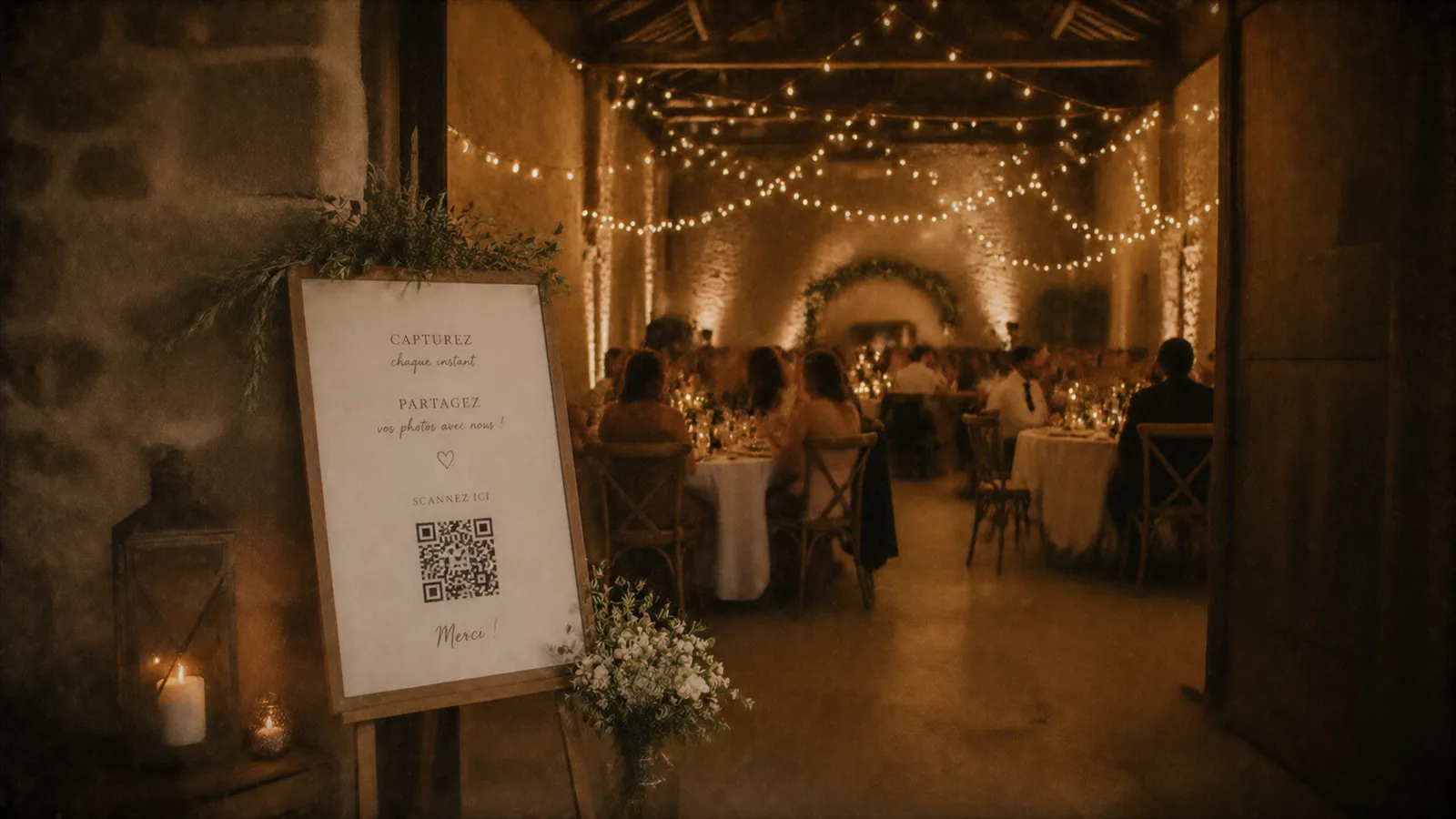
That is also why a line on the invitation is useful: say that the photos will be used for a private album shared between guests, and nothing else (see the guest note you can copy and paste).
Children: stricter
For a minor, the consent of both parents is required before any public sharing. Inside the private wedding album, there is no difficulty. But before posting a photo of your cousin’s son on your account, a quick message is enough, and avoids an awkward conversation.
Who owns the photographer’s photos?
This is a very common confusion. Your photographer keeps their copyright on the images: you are buying a right to use them, not ownership. So check three points in your contract:
1. Can you post the photos on your social media? With or without crediting the photographer?
2. Can you have them printed wherever you like?
3. Can the photographer use your photos for their website or portfolio? If you don’t want that, say so before signing: it is a clause that is easy to negotiate.
The photos taken by your guests don’t have this problem: within the private sphere, they are in effect yours.
If someone asks for a photo to be removed
A guest can ask at any time for a photo of them to be removed. The right answer is simple: you remove it. It is their right, and there is no point arguing. So check that the solution you use lets you delete a photo in one click.
Three good habits
1. Let people know in advance that there will be a shared photo album, and what it will be used for.
2. Keep the album private: accessible via a link, not indexed on Google.
3. Ask before posting a photo outside the circle of guests.
At Time to Flash, the album can only be accessed with your link, the photos are hosted in Europe, every guest can delete their own shots before the reveal, and nothing is used for any other purpose. Your photos stay yours (it is all explained on our wedding guest photos page).