Wedding venue marketing: 12 ways to attract more couples
Google profile, real wedding photos, directories, off-peak dates, viewings that convert: a practical plan to fill your wedding venue’s calendar.
Are you a wedding professional?
Get listed and receive a free code to introduce Time to Flash to your couples.A beautiful venue is no longer enough to fill a calendar. Couples compare dozens of venues online before visiting three, and they rule out within seconds any venue with an empty listing, dated photos or a slow reply. Good wedding venue marketing therefore has two jobs: getting you found, then getting you chosen.
Here are the twelve levers that really matter, in the order a couple meets them: from their first Google search to signing the contract.
First: know who you are filling your venue for
Marketing a wedding venue starts with a simple question: which kind of wedding works best at your place? A 250-seat château, a 90-cover barn and a city-centre hall do not attract the same couples, and should not talk to them the same way.
Write a three-line portrait of your ideal wedding: guest count, budget, style (rustic, elegant, party, intimate), and what the couple wants most (staying overnight, partying late, a garden for an outdoor ceremony). Everything that follows (your photos, your copy, your offers) comes from that portrait. A venue that tries to please everyone ends up standing out to no one.
1. Your Google Business Profile and reviews: the first shop window
Many couples type “wedding venue” plus their region, or search your name directly after seeing it somewhere else. Either way, the first thing they see is your Google Business Profile, with its map, photos and rating.
What a strong profile includes
- The right primary category (wedding venue, banquet hall, event venue, whatever Google offers that fits best), plus secondary categories for the other events you host.
- At least thirty photos, refreshed every season: grounds, the room set up, the room empty, accommodation, and above all photos of real weddings.
- A description that answers questions: seated and standing capacity, beds, finishing time, in-house or outside caterers, access, parking.
- A link to your website and a contact method that actually works (a phone that gets answered, an inbox read every day).
Reviews: the most underrated lever
A couple torn between two similar venues reads the reviews. They look at the rating, but also at how recent the latest reviews are and how you reply to them.
- Ask every couple for a review, one or two weeks after the wedding: they have recovered and are still on a high. Send the direct link, not “leave us a review on Google”.
- Reply to every review, including the glowing ones, mentioning a detail of their day. For a negative review, answer calmly without arguing line by line: the reader that matters is your next client, not the reviewer.
- Never buy reviews or write them yourself: it is misleading commercial practice, sanctioned in many countries, and platforms are getting better at spotting it.
2. Photos of the venue, and photos of real weddings
Couples are buying a day they have not lived yet. Your job is to help them picture it, and nothing does that better than images.
Two sets of photos, not one
Venue photos, taken by a professional on a clear day at the right hour: the façade, the grounds, the room from several angles, the accommodation. They show space, light and condition. Include the empty room too: many couples want to see the blank canvas before imagining their decor.
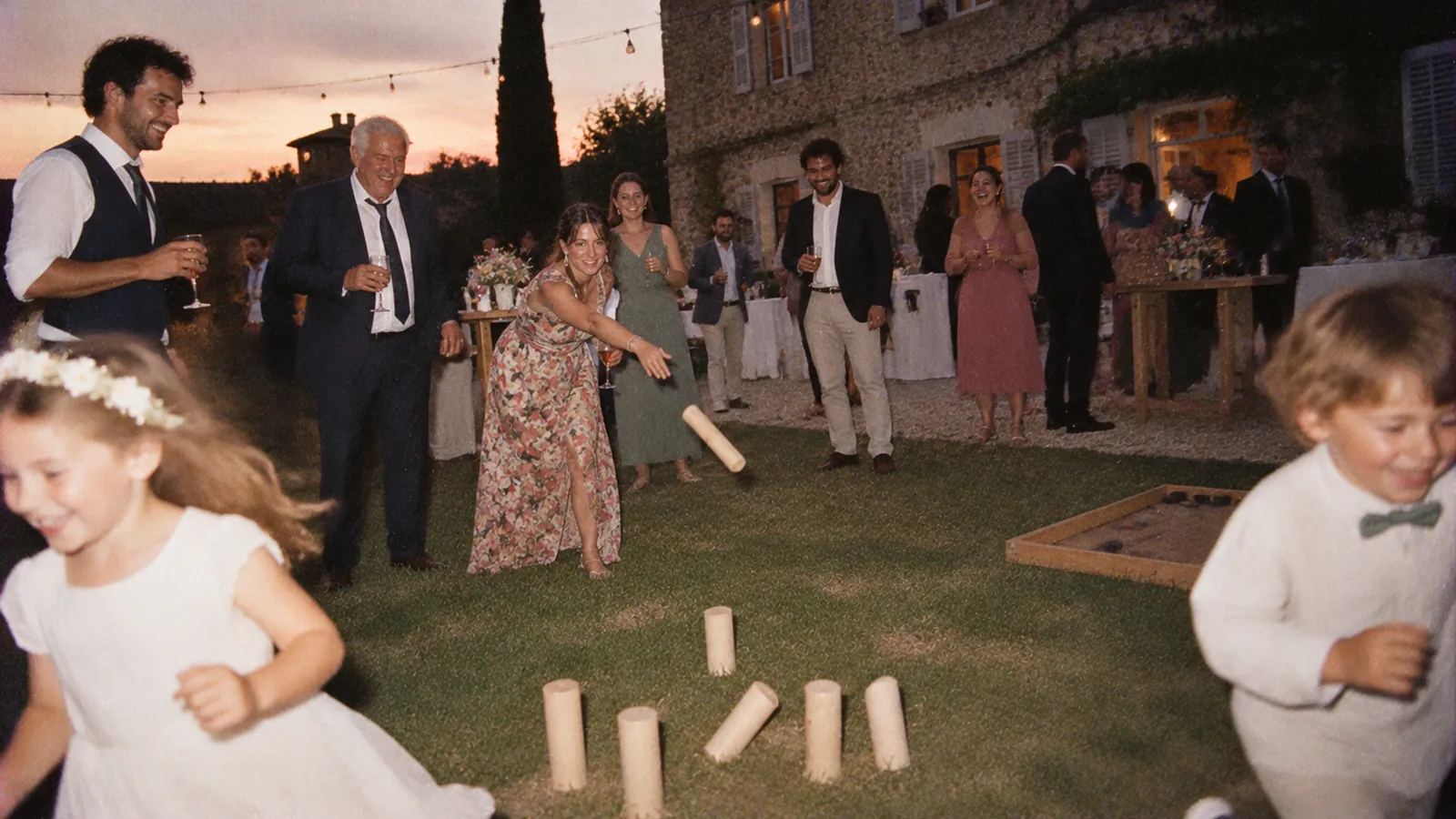
Real wedding photos, the ones that make people want to book. A dressed room full of laughing guests, the dance floor at midnight, the ceremony in the garden, drinks at sunset. These images prove that the party works at your place, not just that the setting is pretty.
How to get them legally
Wedding photos belong to their author (the photographer) and show identifiable people. To publish them, you need the photographer’s permission, and the couple’s for any image they appear in. The simplest approach:
- add an optional clause to your contract allowing you to ask for a few photos after the wedding;
- contact the photographer and offer to use a selection with a credit and a tag: most see it as good exposure;
- favour images where the venue is the subject (a table, the lit room, the grounds) over close-ups of guests.
The rules are explained in more detail in our article on image rights at a wedding.
Think video, and all four seasons
A 30-second video filmed during an autumn or winter event (fire lit, fairy lights, the room at night) answers questions no summer photo can: how people move around, what the venue looks like after dark. That is exactly what helps you sell off-season dates.
3. Wedding directories and platforms
Specialist platforms remain a must for many couples, especially early in their search. Depending on your market, that means Hitched, Bridebook, The Knot or WeddingWire; in France, Mariages.net, ABC Salles, 1001 Salles or Zankyou; plus regional blogs and directories.
A few rules to get something out of them:
- Measure before you pay more. For each platform, count enquiries, viewings and signed contracts over a season. A platform that sends lots of enquiries but few viewings may not be reaching your kind of couple.
- Treat the listing like your website. Same strong photos, same clear answers, same indicative prices. A half-finished listing does more harm than none.
- Collect reviews there too, since couples read them on the platform itself.
- Do not rely on a single source. Your website and Google profile belong to you; a platform can change its rules or prices overnight.
4. Instagram and Pinterest: show the venue alive
Instagram and Pinterest are where couples dream up their wedding. They are not looking for a brochure, they are looking for inspiration.
- Post real weddings (with permission), tagging the photographer, caterer and florist. Every tag puts you in front of that supplier’s audience.
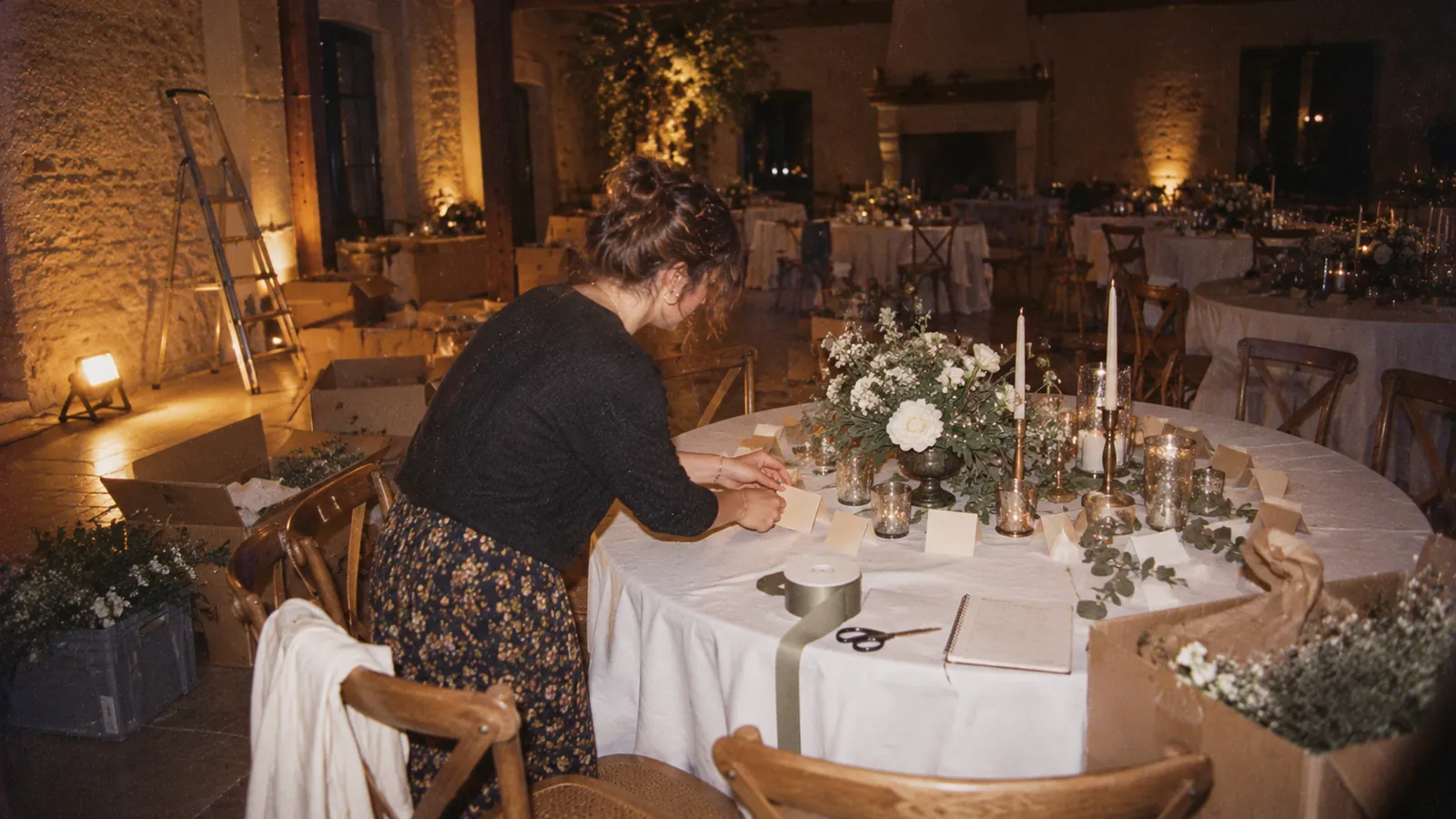
- Show behind the scenes: a room being set up, the caterer’s kitchen, the grounds at dawn. This kind of content, often shot on a phone, performs as well as polished images.
- Reply to messages quickly: many couples make their first enquiry by direct message.
- Keep a sustainable pace: two good posts a week beat an intense week followed by a month of silence.
Pinterest works like a visual search engine: a well-titled pin (“rustic wedding in Burgundy”, “outdoor ceremony in a walled garden”) can bring you visits for years. Create boards by style and season, and point each pin to the matching page on your website.
5. Partnerships with wedding planners and suppliers
A large share of venue recommendations comes from other suppliers. A planner who knows your venue, a photographer who loves your light, a caterer who works well in your kitchen: each of them can send couples your way.
- Invite local wedding planners to visit outside of weddings, with real time to talk: their constraints, what their clients are looking for.
- Keep an up-to-date list of recommended suppliers to give couples. It is a service to them, and a reason for suppliers to mention you in return.
- Share photos and credit them: a photographer you showcase will want to show off your venue.
- Stay flexible on mandatory suppliers. A closed list reassures some venues but drives away many couples who already have their caterer or DJ. If you impose suppliers, explain why.
To understand how wedding planners look for clients (and therefore partner venues), read how wedding planners find clients.
6. Open days and wedding fairs
Open days
A well-run open day is worth dozens of individual viewings. The secret: show the venue as it looks on a wedding day, not empty. Set a full table, invite three or four partner suppliers (florist, caterer with canapés, DJ, photographer), plan a signposted route and a simple form to note each couple’s date, guest count and budget.
Two moments work well: late winter, when couples who got engaged over the holidays start searching, and September or October, for the following year’s weddings.
Wedding fairs
Fairs are expensive (stand, a full working day, materials) and do not suit every venue. They pay off mainly when the fair is close to you and you arrive with a clear offer: dates still available, weekday rates, viewings bookable on the spot. Follow up every contact that same evening.
7. Off-peak dates: winter, weekdays, last minute
Your calendar fills itself in June and September. The real extra revenue is elsewhere: Fridays, Sundays, winter months, dates that free up late.
- Create a dedicated offer rather than cutting your standard rate. A “Friday package” or a “winter wedding” with something included (brunch, an extra night, mulled wine at the drinks reception) protects your price and gives couples a concrete reason to pick those dates.
- Sell winter for what it is. Open fire, candles, golden light, a cosy room: show it in photos and video instead of apologising for the cold.
- Announce last-minute dates on Instagram, to planners and on your website, with a clear deadline. Some couples are specifically looking for a venue six months out.
- Open up to other events: birthdays, christenings, corporate days, end-of-year parties. They fill weekdays and winter, and every guest is a potential future couple.
8. Reply fast, and reply well
Couples often send their enquiry to several venues on the same evening. The first one to reply clearly gets a head start, because it gets the first viewing.
A good reply needs only a few things:
- Whether the date is available, in the very first line (and nearby dates if it is taken).
- A realistic price range for their guest count, or your price brochure. Hiding prices wastes everyone’s time.
- Two or three photos that match their project.
- A viewing proposal with two specific slots, rather than “whenever suits you”.
Prepare reply templates to save time, but always personalise the first sentence. And if you cannot reply the same day, a short message (“received, I will get back to you tomorrow with details”) stops the couple moving on to the next venue.
Simplify your contact form too: name, email, preferred date, guest count. Everything else can come later.
9. The viewing that converts
The viewing is where it all happens. A couple who visits is already interested; your role is to remove their doubts.
Before
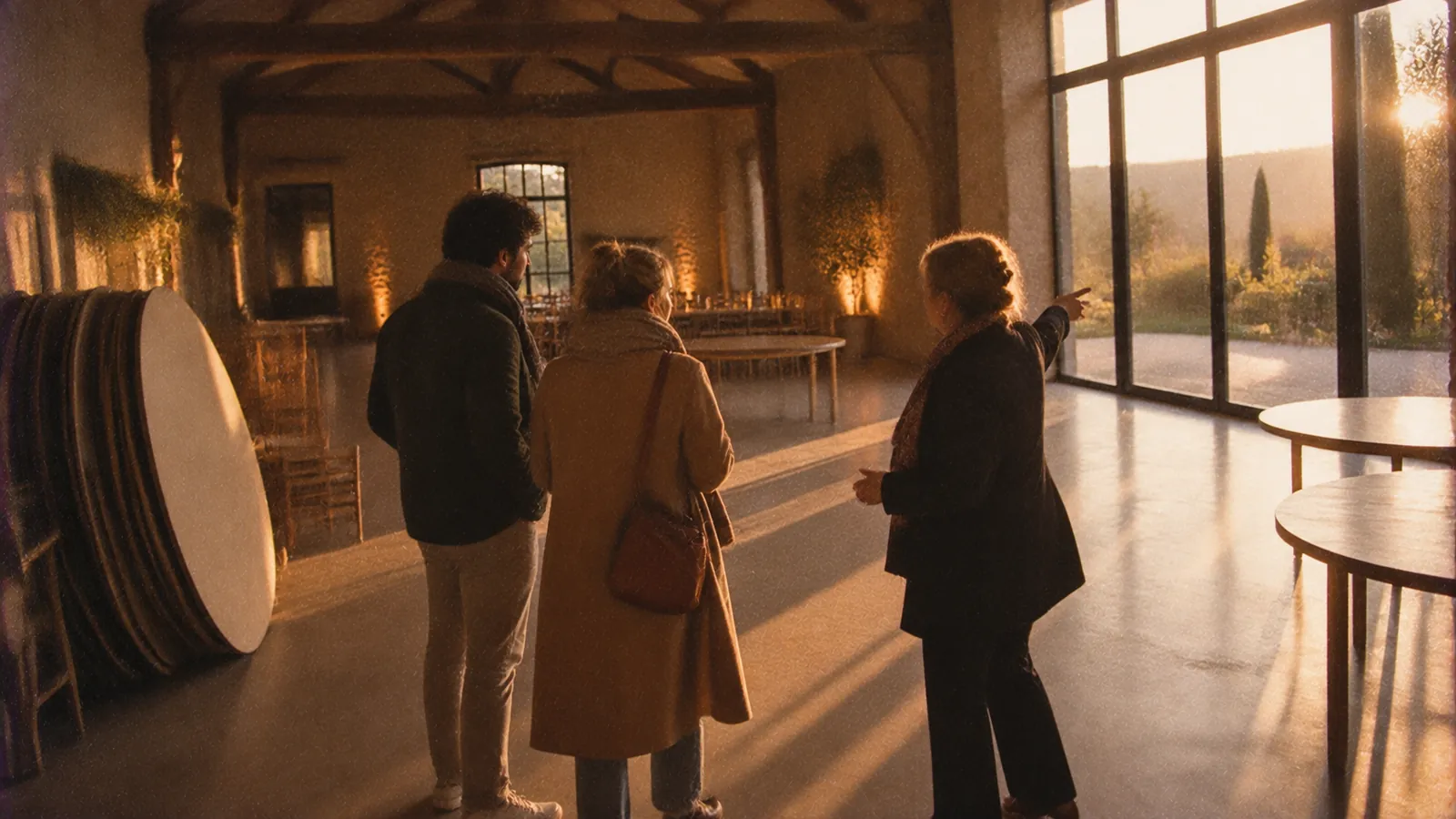
Confirm the day before, with the address and where to park. Reread the enquiry: guest count, style, constraints. If you can, schedule the viewing during a set-up or just after a wedding, while the room is still dressed.
During
- Walk them through the day in order: guests arriving, ceremony, drinks, dinner, party, night, brunch. The couple pictures it hour by hour.
- Show the rain plan. It is worry number one, and answering it before they ask is hugely reassuring.
- Tackle the awkward questions head-on: finishing time, sound limiter, neighbours, deposit, mandatory suppliers. Our list of questions couples ask a wedding venue helps you prepare every answer.
- Leave them alone for five minutes in the room. They need to talk it over.
After
Send the quote within 48 hours, with a summary of what was discussed and a hold on the date for a set period (ten days, for example). If you hear nothing, one friendly follow-up a week later is enough. A hesitant couple appreciates being reminded that the date could go.
10. The included services that make the difference
At a similar price, what tips a couple over is often everything they will not have to organise themselves. Every included service is one less supplier to find, one less quote to compare.
| Service | What the couple gains | Effort for you |
|---|---|---|
| Furniture (tables, chairs, poseur tables) | No rental to organise | Upfront purchase, storage |
| On-site accommodation | No shuttle, a longer party | Cleaning, linen, check-in |
| On-the-day coordination | A single point of contact | One person on site |
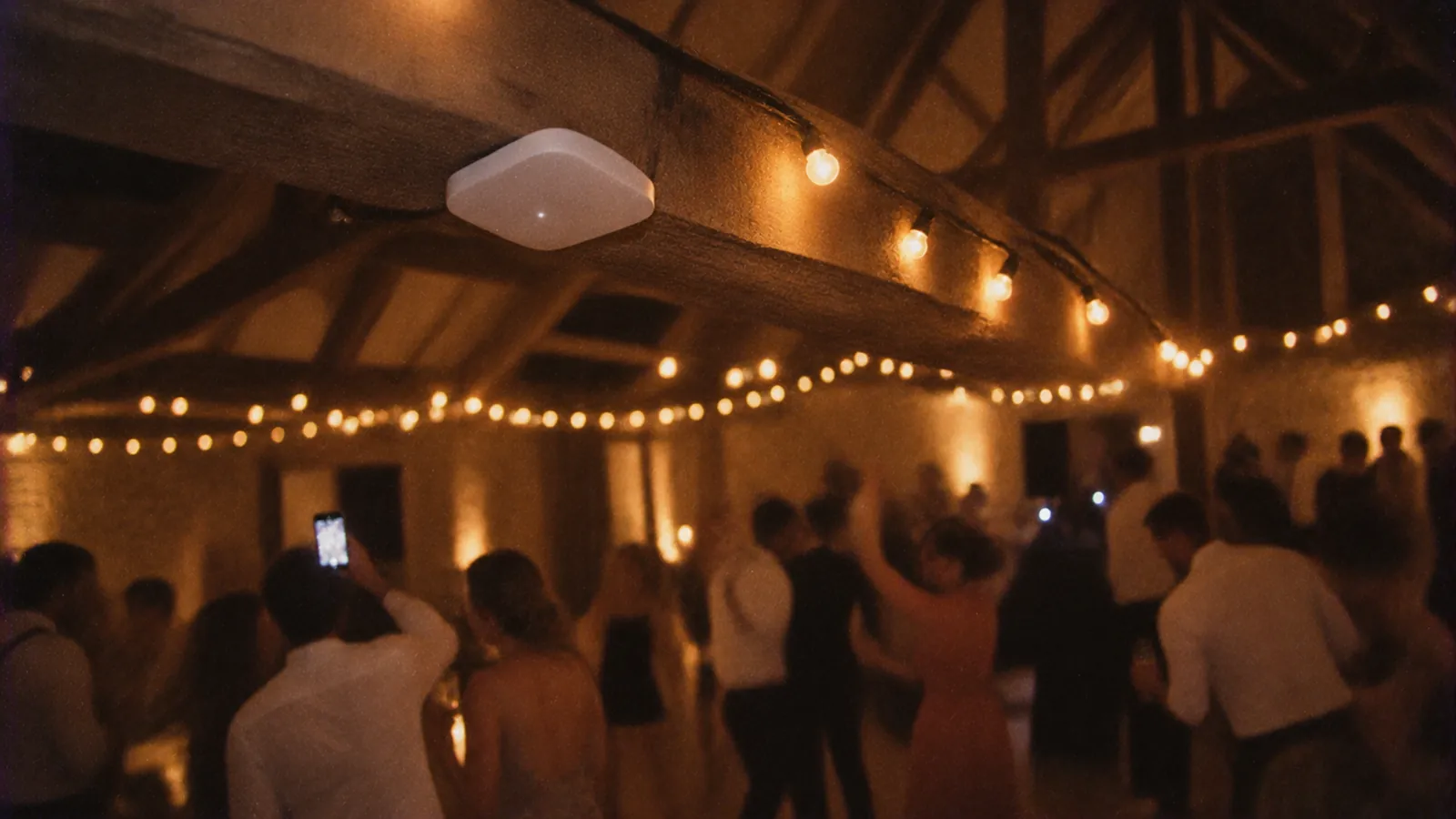
| Wifi that covers the room | Music, payments, guests’ photos | One-off installation |
| Rain plan (room, marquee) | Peace of mind | Varies |
| Next-day brunch | A longer celebration with no logistics | Partner caterer |
| Turnkey entertainment | Fewer suppliers to book | Low to medium |
Wifi deserves a special mention: more and more couples ask for it, for their suppliers as much as their guests. We cover the options in wifi at a wedding venue.
Turnkey entertainment
Entertainment is a great selling point because it shows up in photos and people talk about it afterwards. Lawn games, a kids’ corner, a fire pit, a tasting at the drinks reception: we review them, with cost and profitability, in the activities a wedding venue can offer.
One of the easiest to include: a digital disposable camera for guests. No booth to deliver, no cameras to charge or collect, just a QR code on a poster that each guest scans to take a limited number of photos with their phone, all revealed at once later in a shared album. For a venue, it is one more line in the package, with no equipment and no staff. That is what Time to Flash does, for example.
11. Your website: the page that must answer everything
Every source above sends people to your website. It must be fast on mobile (most couples browse that way) and answer questions without anyone needing to write to you:
- capacities (seated, standing, beds);
- indicative or “from” prices, by season and day of the week;
- what is included and what is optional;
- timings, sound rules, free or mandatory suppliers;
- access, nearby stations and airports, accommodation in the area;
- a gallery of real weddings, and a contact button visible on every page.
One wedding page per style or season (winter wedding, small wedding, outdoor ceremony) also helps you rank for specific searches.
12. Turn this year’s couples into ambassadors
Word of mouth is still the most reliable source of couples: every wedding brings together dozens of guests, some of whom will marry within two years. Everything that makes the day memorable, and therefore talked about, works for you.
- Look after the details guests notice: the welcome, the signage, clean toilets at midnight, breakfast.
- Stay in touch: a note on their first anniversary, an invitation to your open day.
- Ask them to recommend you, simply, when you ask for a review.
- Collect memories seen through guests’ eyes: with the couple’s permission, a few photos taken by guests show your venue as people live it, not as it is staged.
The plan for one season
This month: a complete Google profile, replies to every review, enquiry reply templates.
Within three months: a professional photo shoot, a selection of real wedding photos (with permission), a clear pricing page.
Within six months: an open day with partners, a weekday and winter offer, a spreadsheet tracking enquiries by source.
Ongoing: two Instagram posts a week, a review request after every wedding, one more included service each season.
Offer Time to Flash to your couples
If including a digital disposable camera in your packages appeals to you, we have opened a programme for wedding venues and suppliers. You offer or recommend the activity to your couples, their guests photograph the party with their phones, and the couple discovers the album the next day. Everything is explained on our page offer Time to Flash to your couples.
Frequently asked questions
How can a wedding venue attract more couples?
Start with what is free and visible: a complete Google profile, photos of real weddings and replies to every review. Then answer every enquiry the same day with availability, a price range and two viewing slots. Finally, build partnerships with local wedding planners and suppliers, who recommend a lot of venues.
How do I fill my venue in winter or on weekdays?
Create dedicated offers (Friday package, winter wedding) with something included, rather than lowering your standard rate. Show the venue in winter, in photos and video: open fire, lights, a cosy room. Also open your calendar to birthdays, christenings and corporate events.
Should my venue be listed on wedding directories?
For many venues, yes, on at least one or two platforms, because plenty of couples start their search there. Track enquiries, viewings and contracts from each over a season before increasing your budget. Keep your website and Google profile as your main sources, since you own them.
Can a venue publish photos from a wedding on its website?
Only with the permission of the photographer, who holds the copyright, and of identifiable people, starting with the couple. The simplest way is an optional clause in your contract and a credit for the photographer. Favour images where the venue is the subject rather than close-ups of guests.
Which included services make couples choose a venue?
The ones that save them from finding other suppliers: furniture, on-site accommodation, on-the-day coordination, a rain plan, next-day brunch, wifi that covers the room and turnkey entertainment. Every included service makes comparison easier and justifies your price.