Questions to ask a wedding venue: the complete checklist
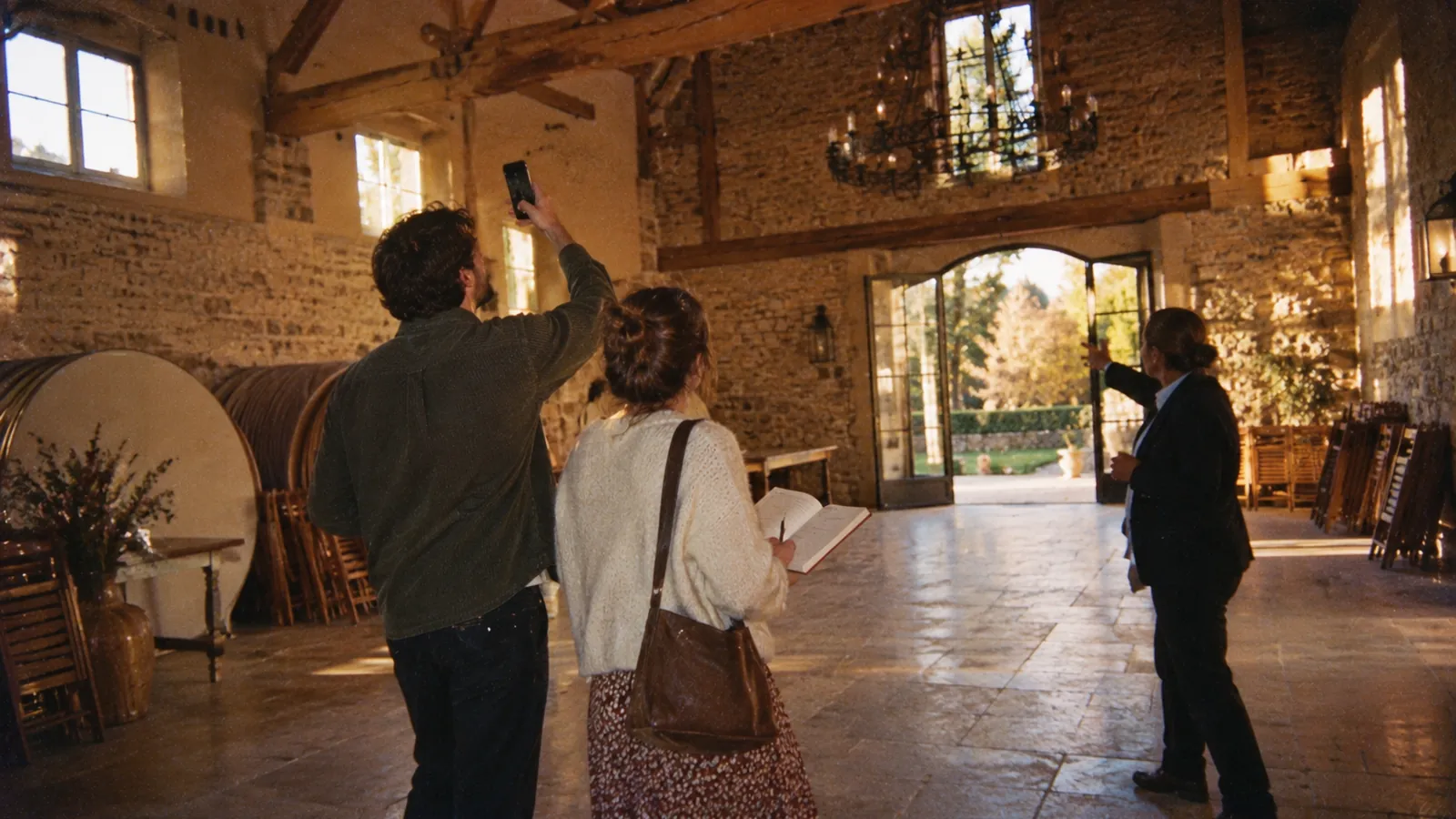
The questions to ask a wedding venue, topic by topic, with what each answer really tells you, the classic traps, and a printable checklist for your visit.
The venue is often the biggest expense of a wedding, and the first contract you sign. Once the deposit is paid, backing out is expensive. Here are the questions to ask a wedding venue, sorted by topic, with why each one matters and the trap it helps you avoid. At the end, a checklist to print and take on your visit.
One tip before you go: if you can, visit the venue in the same season and at the same time of day as your wedding. A room bathed in sunlight at 3 pm in June looks very different at 11 pm in October.
How to choose a wedding venue: the method
- Have your numbers ready before the visit: guest count (adults and children), maximum budget, two or three possible dates.
- Go as a pair, or with a friend. One asks the questions, the other takes notes and photos.
- Get the important answers in writing. If it is not in the contract, it does not exist.
- Ask for a sample contract and read it calmly at home, not on the spot.
1. Capacity and spaces
- How many people for a seated dinner, and for a standing reception? The two figures are very different. A room advertised as “200 people” often means standing.
- How many with a dance floor and space for the DJ? The dance floor and DJ booth easily take the place of several tables.
- What is the maximum capacity allowed? Venues open to the public have a safety limit. Going over it becomes an insurance problem if anything happens.
- Are there separate spaces for the ceremony, the cocktail hour, dinner, a kids’ corner, a quiet lounge?
- Is the venue exclusive? Some estates host two events on the same day, or keep a restaurant open to the public.
Why it matters: an overcrowded room is uncomfortable, an oversized one feels empty. Ask for a floor plan with the table layout you have in mind (round or long tables), not a theoretical capacity.
2. The rain plan
- Where do the ceremony and cocktail hour happen if it rains? Visit that space too, just as carefully.
- Is the backup included, or do you need to rent a marquee? At what price?
- When do you have to decide? The day before, that morning, two hours ahead?
- Can the spaces be heated or cooled in extreme weather?
Why it matters: many venues are sold on their garden. If the backup is a barn or a room that is too small, that is what you should judge, because you might spend the day there.
3. Timings and end of the night
- What time can you get in to decorate? Is the day before possible, and at what price?
- What time must the music stop, and what time do you have to leave?
- Is clearing up done that night or the next morning?
- Is the venue available the next day for a brunch?
- Are there charges for running late? Some venues bill every extra hour.
Why it matters: music ending at 1 am changes the whole evening. If you dream of partying until dawn, it is the first question to ask, before you even visit.
4. Noise and neighbours
- Is there a sound limiter? It is a device that cuts the sound system if the volume goes over a threshold. What level is it set to?
- Is music allowed outside, and until when?
- Are there neighbours nearby, and have there been complaints?
- Do doors and windows have to be closed after a certain time?
Why it matters: a limiter set too low cuts the music every time the room sings along. Have your DJ talk to the venue before you sign with them: they will know whether it is workable.
5. In-house or outside caterer
- Is the caterer imposed, chosen from a list, or entirely up to you?
- If you can choose, is there a fee for an outside caterer?
- How is the kitchen equipped? Cold room, ovens, hobs, washing-up area, enough electrical power?
- Can you have a tasting before signing, if the caterer is imposed?
- Can the cake come from another baker? Some caterers charge a cake-cutting fee.
Why it matters: catering often costs as much as the venue hire. A cheap venue with an expensive imposed caterer is not a cheap venue. Always compare the total cost per guest.
6. Drinks and corkage
- Can you bring your own drinks?
- Is there a corkage fee, a charge for each bottle you bring and open? Is it per bottle or a flat fee?
- Is it the same for wine, champagne and spirits? Does it go down with volume?
- Who staffs the bar, and until what time?
Why it matters: not every venue charges corkage, and amounts vary widely. Multiplied by the number of bottles at a wedding, it can wipe out the savings of bringing your own. Do the maths before deciding.
7. Equipment included
- Tables and chairs: how many, what shape and size? Are the chairs presentable, or do you need covers?
- Linen, tableware, glasses: included or to rent?
- Sound system, microphone, projector, screen: available and working?
- Lighting: can the room be dimmed? Are outdoor areas lit at night?
- Heating and air conditioning: included or charged separately?
Why it matters: renting tables, chairs, linen and tableware for a hundred people is a serious budget. A slightly pricier but fully equipped venue sometimes costs less overall.
8. Accommodation
- How many beds on site, and at what price?
- Do you have to book all the accommodation on the estate?
- What time is check-out the next day?
- Which nearby hotels or guesthouses does the venue recommend?
Why it matters: staying on site means nobody drives after the party. It is a real safety issue, and a huge comfort for guests who travelled far.
9. Access and parking
- How many parking spaces, and can cars stay overnight?
- Is the venue easy to find by GPS? Is the path lit at night?
- Is there a train station nearby, and are taxis or ride-hailing available late at night?
- Is a shuttle possible, or already offered by the venue?
Why it matters: in the countryside, finding a taxi at 2 am can be a real challenge. If getting home is complicated, plan a shuttle or accommodation.
10. Accessibility
- Is the venue wheelchair accessible? Stairs, ramps, lift?
- Are there accessible toilets?
- Are the spaces close together, or is there a long walk over gravel or grass?
Why it matters: a grandparent who cannot get down to the dining room is a ruined day for them and for you. Think about heels on cobblestones and pushchairs too.
11. Mobile signal and wifi
- Is there mobile signal inside the room? Don’t settle for the answer: turn off wifi on your phone and test it yourself, inside the room, not in the car park. If you can, test with two different networks.
- Is there guest wifi that covers the room, not just reception?
- How many simultaneous connections can it handle, and what is the password?
Why it matters: the most beautiful venues (vaulted cellars, stone barns, valleys) are often the worst covered. No signal means no shared photos, no calls for a lost guest, no card payments at the bar. There are solutions: see no signal at the venue, what to do and wifi at the wedding venue.
12. Entertainment and decorations allowed
- What entertainment is allowed? Fireworks, spark fountains, candles, smoke machine, confetti, rice?
- Can decorations be attached to walls, beams or the ceiling?
- Is there a socket and space for a photo booth or DJ?
- Can you set up outdoor games, or a ceremony in the garden?
Why it matters: you don’t want to find out a month before the wedding that candles are banned or fireworks impossible. If you are still looking for ideas, we gathered 36 wedding entertainment ideas with their constraints.
13. Required suppliers and your contact
- Are any suppliers imposed, or is there a mandatory list (DJ, florist, photographer, furniture hire)?
- Are there fees for using an outside supplier?
- Who from the venue will be there on the day, and until what time? Who do you call if something goes wrong?
- Who handles music licensing: you, the DJ or the venue?
Why it matters: an imposed supplier can be excellent, but you should be told before signing, not after. And on the day, a reachable venue manager solves in five minutes what would otherwise ruin an hour.
14. Price, deposit and payment
- What exactly is included in the price? Cleaning, electricity, heating, security, tourist tax?
- Is the price guaranteed until the wedding, or can it change if you book two years ahead?
- How much is the deposit at booking, and what is the payment schedule after that?
- What happens to the deposit if you cancel?
Why it matters: the wording of the deposit is crucial. In France, the law distinguishes arrhes (either side can withdraw: you lose them, or the venue pays you back double) from an acompte (a firm commitment: if you cancel, you may owe the full price). Between a business and a consumer, money paid in advance counts as arrhes unless the contract says otherwise. Elsewhere, rules differ: read exactly what your contract says about refunds.
15. Cancellation and postponement
- What happens if you cancel, depending on when?
- Can you move the date, and on what terms?
- What happens if the venue cancels (sale, building work, damage)?
- Which situations does the contract treat as force majeure?
Why it matters: couples often sign more than a year in advance. A lot can happen in a year. A contract that only covers cancellations by the client, never by the venue, is unbalanced.
16. Insurance
- Does the venue require proof of liability insurance? Does your home insurance cover an event like this?
- Is the venue itself insured for accidents on its premises?
- Do you need wedding cancellation insurance? Specialist policies exist; compare what they really cover (illness, weather, supplier failure).
Why it matters: red wine on an antique sofa or a broken window can be expensive. Better to know who pays before it happens.
17. Inspection and security deposit
- Is there an inspection on arrival and departure, with you present?
- How much is the security deposit, and how soon is it returned?
- Is cleaning included, or do you have to leave the room clean?
- Who handles rubbish, recycling and empty bottles?
- Are breakages charged per item?
Why it matters: the security deposit is often several hundred euros, sometimes more. Take dated photos of the room when you arrive: it is your best protection in a dispute.
Classic traps when visiting a wedding venue
- The “from” price. It often means a weekday off-season, without cleaning or heating. Ask for an all-inclusive quote for your date and guest count.
- Standing capacity sold as seated capacity. Ask to see a real table plan.
- The rain plan you never saw. The garden is stunning, the backup room much less so.
- Finding out the end time too late. Or music cut at 1 am by a limiter nobody mentioned.
- Hidden costs. Metered electricity, compulsory security staff, corkage, cake-cutting fee, outside caterer fee.
- 10 am check-out the next day. With guests in bed at 5 am, it is a scramble.
- Too few toilets for the number of guests, or power that trips when the caterer and DJ plug everything in at once.
- Verbal promises. “The day before is no problem”, “we’ll let you finish later”: if it is not written down, it commits no one.
Also ask for contacts of couples who married there, or read recent reviews. And once the venue is signed, the rest of the calendar awaits: the wedding planning timeline helps you forget nothing.
The printable checklist for your visit
Print this list, tick it off during the visit, and note answers in the margin.
- ☐ Seated capacity, with dance floor and DJ
- ☐ Standing capacity and maximum capacity allowed
- ☐ Separate spaces: ceremony, cocktail hour, dinner, children
- ☐ Exclusive hire
- ☐ Rain plan visited, included or extra, decision time
- ☐ Heating and air conditioning
- ☐ Access time for setting up, day before possible
- ☐ Time the music stops and time to leave
- ☐ Clearing up that night or next day, venue available for brunch
- ☐ Sound limiter and its level, outdoor music until when
- ☐ Nearby neighbours, rules on doors and windows
- ☐ Caterer imposed, from a list or free, outside caterer fee
- ☐ Kitchen equipment and electrical power
- ☐ Cake from another baker, cake-cutting fee
- ☐ Bringing drinks, corkage and its amount
- ☐ Tables, chairs, linen, tableware included
- ☐ Sound system, microphone, projector, indoor and outdoor lighting
- ☐ Number of beds, price, check-out time
- ☐ Parking, lit path, taxis and shuttles
- ☐ Wheelchair access and accessible toilets
- ☐ Signal tested inside the room on two networks
- ☐ Guest wifi: coverage, number of connections, password
- ☐ Entertainment allowed: fireworks, candles, confetti, smoke
- ☐ Decorations on walls and ceiling
- ☐ Imposed suppliers and outside supplier fees
- ☐ Venue contact on the day and their number
- ☐ Music licensing: whose responsibility
- ☐ What the price includes, price guaranteed until the date
- ☐ Deposit terms, amount and payment schedule
- ☐ Cancellation and postponement terms, on both sides
- ☐ Proof of liability insurance required
- ☐ Inspection on arrival and departure, security deposit amount
- ☐ Cleaning, rubbish, breakage charges
- ☐ Sample contract collected
One last idea for the day itself: if the signal is good in the room, a shared disposable camera turns every guest’s phone into a camera, with a QR code on the tables and an album revealed the next day.
Frequently asked questions
What questions should you ask when visiting a wedding venue?
The essentials: seated capacity with a dance floor, the rain plan, the time the music must stop, whether the caterer is imposed, corkage, what the price includes, and the deposit and cancellation terms. Add mobile signal, accommodation and parking, which are often forgotten.
Is a wedding venue deposit refundable?
It depends on the contract and the country. In France, money paid in advance between a business and a consumer counts as arrhes unless the contract says otherwise: you can withdraw by losing them, and the venue by paying back double. A firm deposit (acompte) can leave you owing the full price, so read the wording carefully.
What is a corkage fee at a wedding?
It is a charge the venue or caterer applies to each bottle you bring and open, to make up for not selling you drinks. It can be per bottle or a flat fee, and not every venue charges one. Work it out on your expected number of bottles before deciding to bring your own.
How far in advance should you book a wedding venue?
For a Saturday between May and September, the most popular venues are often booked more than a year ahead. Off-season or midweek, a few months may be enough. The venue sets the date, so it is the first booking to make.
What should you check about mobile signal at a wedding venue?
Test the signal yourself inside the room with wifi off, ideally on two networks. Ask whether guest wifi covers the whole room and how many connections it supports. Without signal, guests cannot share photos or call a taxi.
Do you need insurance to hire a wedding venue?
Many venues ask for proof of liability insurance, which your home insurance may provide: check with your insurer. Wedding cancellation insurance is optional; compare exactly what it covers before taking it out.